My philosophy with YouTube and content creation in general was the idea that negativity = views. I was constantly seeing people who understood media and algorithms saying that whenever you have something that is very negative, people are more likely to click on it. Honestly, I internalized that idea.
When I uploaded a (very inflammatory) video titled “Anime sucks and here’s why”, I didn’t expect just how well the video would do, but I did expect it to succeed. How could it not? For the terminally online, anime is an incredibly popular pass time. But of course, the video was incredibly controversial, usually holding on to more dislikes than likes. The views were there, and I had found my formula.
Step 1: Say something inflammatory about something other people like
Step 2: Get a bunch of views
Step 3: ???
Step 4: Profit!

I really never could replicate the success of my Anime Sucks video though, and I struggled to understand why.
Late last year, I returned to YouTube after a nearly 2 year hiatus. This time, I decided I wanted to talk about video games, my biggest hobby in life. I wanted to talk about my thoughts and feelings on the medium and spread my tastes out to the world.
I started off with a video questioning why Mario and Luigi Brothership was getting some (in my opinion, undue) hate. The video seemed to strike a bit of a chord, garnering a decent view count of 1,500, with pretty good interaction on it too. Lots of comments, lots of likes, not a lot of dislikes.
A few videos later, I uploaded a video that was negative on Kingdom Hearts, it didn’t do so well.
I uploaded a decently positive video on Princess Peach Showtime, it did okay!
My video praising the switch release of Donkey Kong Country did alright!
A video ripping on Pikmin 3, not so good.
A video talking about my recent love story with Pokemon TCG Pocket, very positive feedback there.
A video that drew comparisons between Hollow Knight and Ori and the Blind Forest, but in a not so positive way, yeah that video got attention but mostly negative.
I think you get the picture, my videos that are positive, not negative and inflammatory, are doing better overall than the inflammatory ones.
… But why tho?
Like I said, my deep understanding of the social media landscape and the way that these sites operate is that the inflammatory gets rewarded through clicks and interactions. Why have things seemed to have flipped? Or have they always been this way and I just never noticed?
I have a couple ideas on why this is the case, none of them revolutionary so don’t hold on to your hats.
Number 1, people enjoy when their opinions get validated, especially on stuff they like.
If I make a video, like the one I just did on Clair Obscur, where I talk about a game in a positive way, there will be a group of people who come to that video because they themselves really enjoyed the game and would like to hear someone else put into words their feelings for the game. It feels good to see someone else agree with you that a piece of media you enjoyed was actually good. It makes you feel smart, it makes you feel right, it makes you feel accepted by the community.
It’s something I myself do, whenever a movie comes out and I really enjoy it, first thing I do is check the reviews to make sure my opinion is correct. Obviously I know that opinions on art are purely subjective and no one can actually be wrong, but come on, most of us tend to think about it as a right opinion vs wrong opinion.
Liking Joker 2? Wrong opinion. Liking Fight Club? Right opinion. Sorry, but these are just facts.
It feels good to see someone else agree with you that a piece of media you enjoyed was actually good. It makes you feel smart, it makes you feel right, it makes you feel accepted by the community.
Number 2, it was never true that the algorithms favored inflammatory content.
Now, this could be the case, I really don’t know, and in a lot of ways I think these companies like Google, like Meta… they don’t even know how their own algorithm works. The algorithm is given a directive, and that directive is maximize the amount of time a person spends on our platform. The goal isn’t to suggest videos you want to watch or to show you memes that you’re likely to interact with. If it does those things, it’s because they serve the greater purpose of keeping you on the platform. They give it the directive and let it go wild. I’m sure it’s more nuanced than that, but I think that’s a generalized way to think about it.
It is entirely possible that some people are more prone to click on videos that make them angry in some way. On the flip side, it’s also possible that some people avoid stuff that makes them angry at all costs.
If I see a video that calls Pulp Fiction the hottest dogshit film to ever disgrace this earth, I don’t think I’m going to click it. I really don’t need to hear someone ranting about how my favorite movie sucks and that I’m a dumb idiot for liking it, I really don’t. That’s not the kind of thing that appeals to me.
With that said, I just don’t see many videos popping up telling me that Pulp Fiction is a dogshit movie.
The goal isn’t to suggest videos you want to watch or to show you memes that you’re likely to interact with. If it does those things, it’s because they serve the greater purpose of keeping you on the platform.
I really think the main thing here does boil down to people wanting their opinions to be validated.
Circling back to my infamous “Anime Sucks” video, the analytics there tell an interesting story. The vast, vast majority of views on that video have come directly from YouTube search. It’s not the algorithm pushing my video (outside of showing it higher up in the search results).
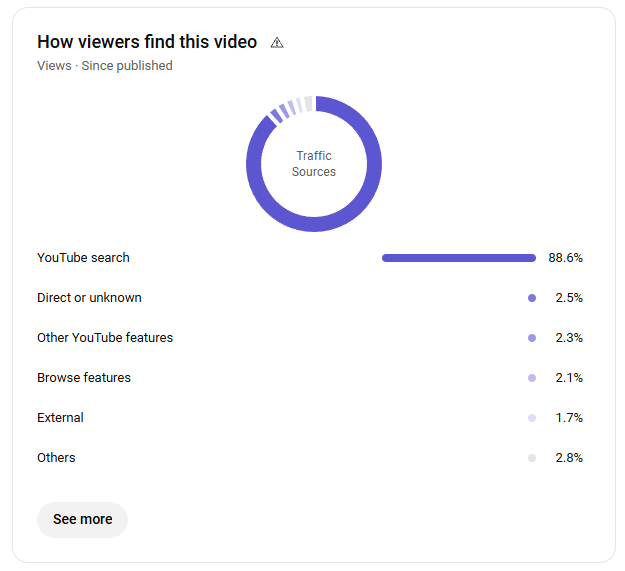
YouTube even shows you specific terms people search in order to get to your video:
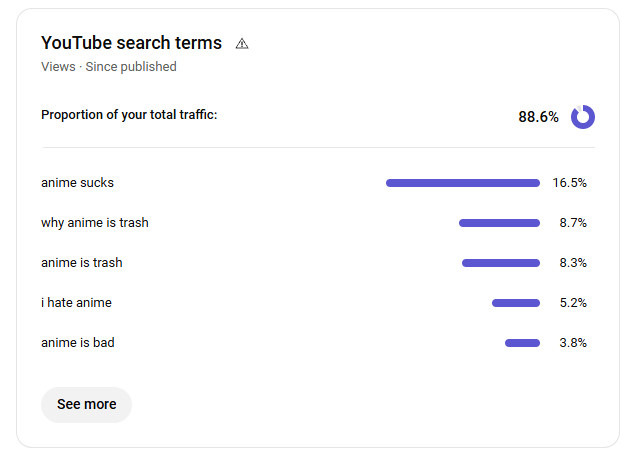
As you can see, there are a lot of people out there who just… hate anime. They hate anime, and all they see online are people talking about how much they love it. These people, exasperated and feeling like they can’t be the only ones out there who hate anime, go to YouTube and search up “anime sucks” to see if anyone out there agrees with them. They see my video, they click on it, they leave a comment etc.
Now on the flip side, the like to dislike ratio adds an extra dimension to the story:
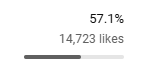
57% of people (who actually use the like/dislike buttons on YouTube) agree with the premise that anime sucks and give me a like to signify that. But if most people are coming to the video from YouTube search, and most of them are looking up something along the lines of “anime sucks”, then that means a good percentage of the people are just hate-watching the video so that they can dislike it and leave a comment telling me I’m an idiot for hating anime. They, as anime fans, are searching “anime sucks” just to get angry.
I think with something as divisive as anime, this strategy for content creation works. If you say something inflammatory, like that it sucks, a lot of people are going to step in to agree because they’re glad their opinion is being validated. Meanwhile, a percentage of crazy people in the fandom will spend their time hate-watching videos of people saying inflammatory things about the thing they like for reasons that evade me.
To jump back to my second point, this is all evidence that the algorithm never pushed my video, it just suggested it to people who entered “anime sucks” into the YouTube search bar.
Now for most things, the fanbase as well as the haters aren’t crazy and won’t waste their day watching these kinds of videos. Most people care more about hearing people agree with them on their tastes in video games, movies, TV, music and what have you.
And that’s why a video talking about why Anime Sucks is gonna blow up and get hundreds of thousands of views, while a video talking about why poetry sucks only garnered a few thousand views.
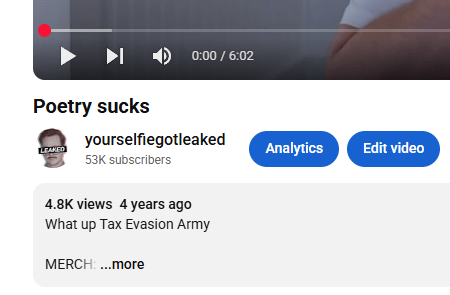
Who the hell is looking up “poetry sucks?”
To wrap this up, given this is starting to drag, it seems like negative videos only do well on controversial topics with rabid fanbases like anime, while most people are generally interested in seeing positive criticism of the things they enjoy.
Let me know what you think though, am I completely off base here? Interested to hear any thoughts people might have.
Peace.
 YourBlogGotLeaked
Leave a comment